

Dienstag, Dezember 16, 2025
Der Informant
  • Global
  • Politik
  • Verteidigung
  • Unternehmen
  • Gesundheit
  • Sport
  • Tech
  • Unterhaltung
  • Lebensstil
No Result
View All Result
DerInformant.com
  • Global
  • Politik
  • Verteidigung
  • Unternehmen
  • Gesundheit
  • Sport
  • Tech
  • Unterhaltung
  • Lebensstil
No Result
View All Result
DerInformant.com
No Result
View All Result
Home Gesundheit

Pandemic Preparedness for CDMOs: Will It Be Different Next Time?

DerInformant by DerInformant
Januar 6, 2024
in Gesundheit
Reading Time: 4 mins read
0 0
A A
0
Pandemic Preparedness for CDMOs: Will It Be Different Next Time?
Share on FacebookShare on Twitter


When the Covid-19 pandemic hit, contract development and manufacturing organizations (CDMOs) became indispensable partners to the biopharmaceutical companies that developed vaccines, rapidly producing billions of urgently needed vaccine doses for patients around the globe. But as the health crisis wanes, these organizations risk missing a pivotal opportunity to reinforce preparedness for the next – inevitable – pandemic.

CDMOs play an indispensable role in the pharmaceutical ecosystem, acting as key partners to produce medications and vaccines for biopharma companies. By providing specialized manufacturing and development services, CDMOs ensure innovative medicines are produced at scale, meeting global demand and helping enable patient access to vital treatments.

This flexible, efficient model proved invaluable when Covid-19 vaccine developers urgently needed to scale up manufacturing to meet global need. Major CDMOs responded to the call, radically expanding their capacity, going from zero Covid-19 vaccines in 2020 to more than 13 billion doses administered by the end of 2022—and peak annual capacity of more than 20 billion doses. CDMOs became an unexpected cornerstone of the world’s swift pandemic response.

However, the rapid scaling for Covid-19  exposed some vulnerabilities in CDMOs’ model and in the world’s pandemic response. Vaccines often reached higher-income countries before their low- and middle-income counterparts. As vaccination rates slowed and orders plummeted, CDMOs dealt with excess capacity, high inventory and significant workforce reductions. This painful whiplash, immediately after an unprecedented surge in production, underscores the need for new strategies to better leverage CDMOs in future pandemic planning.

Industry’s heroic response to the worst global pandemic in a century was a remarkable feat. Indeed, our industry, including multiple CDMOs, rose to the challenge to save lives. And we were largely flying without a net. The next time, we don’t have to—but only if we learn from the past and strategically prepare for the future. Here are three critical steps for CDMOs and global partners to take to be better prepared for a rapid, equitable response to the next pandemic:

First, CDMOs should spearhead manufacturing innovations for speed, adaptability, and volume flexibility. While Covid vaccines represented rapid scientific breakthroughs, production ramp-up encountered unforeseen bottlenecks, especially in fill-and-finish. CDMOs and other organizations must co-invest to develop new modular, portable, and adaptable manufacturing platforms ready to enable rapid surge capacity when a new pathogen emerges. For example, MIT researchers won an $82 million FDA grant to  the U.S. Food and Drug Administration to build a continuous production line for messenger RNA (mRNA) vaccines to support pandemic readiness. My company, Recipharm, has received a subcontract for a substantial portion of this project and our job is to test and implement the end-to-end process developed by MIT researchers in a pilot-scale manufacturing facility. This collaboration could be a model for needed innovation and partnership on highly flexible pandemic-ready production facilities.

Second, we need new business models or financial support to sustain pandemic readiness. Currently, CDMOs make calculated expansion decisions based on commercial demand forecasts, not reserve capacity for unpredictable public health crises. But there are potential solutions. For example, asking vaccine manufacturers to always have an additional “dormant” line where training and qualification is maintained each year. Nations and international organizations like the World Health Organization (WHO) could sponsor or even create a dedicated unit for such emergency infrastructure at global scale at relatively small cost, with the aim of vaccinating the world in a more equitable way. The U.S., Canadian, Japanese and other governments, and other institutions like the WHO and World Bank, have already awarded or pledged at least $7.8 billion in funding specifically for future pandemic preparedness. Most funding is earmarked for vaccine development, an absolute necessity, but some will also go towards manufacturing capability. It’s a start, but CDMOs will need additional support.

Third, CDMOs should have a seat at the table in procurement alliances, distribution planning and simulations along with government agencies, WHO, NGOs and vaccine developers. CDMOs’ product-agnostic role as flexible contract service providers, positions them to facilitate equitable vaccine distribution when speed is paramount, and joint simulated outbreak exercises would forge connections while revealing preparedness gaps. The WHO could be a potential convening organization, but regional alliances, such as the European Union’s HERA stockpile incubator or the Africa CDC also offer promise for broader coordination.

We also need other solutions, from stockpiling basic ingredients to clarifying distribution priorities. But empowering CDMOs is one overlooked yet viable piece of the pandemic readiness puzzle. Their specialized expertise warrants greater representation in global policy dialogues and planning. With cooperation, foresight, and new operating principles, CDMOs could shift from being reactive manufacturers to proactive architects of preparedness and health equity when the next outbreak strikes.

But mobilizing CDMOs’ full potential requires confronting real barriers. Traditionally seen as vendors rather than collaborators, CDMOs are often excluded from preparedness infrastructure. Long manufacturing timelines and complex logistics can also constrain nimbleness. But identifying limitations creates opportunities for innovation.

Covid-19 was a wake-up call. With political will and creative thinking, we can leverage CDMOs’ strengths to shore up preparedness and pivot from reactive strategies to proactive, unified global efforts. CDMOs cannot develop or distribute vaccines alone, but through partnerships, their infrastructure can provide the foundation for delivering life-saving tools swiftly and equitably when a new public health crisis emerges.

The time to lay that groundwork is now, however, before the Covid-19 lessons fades and we’re responding to a new pandemic threat.

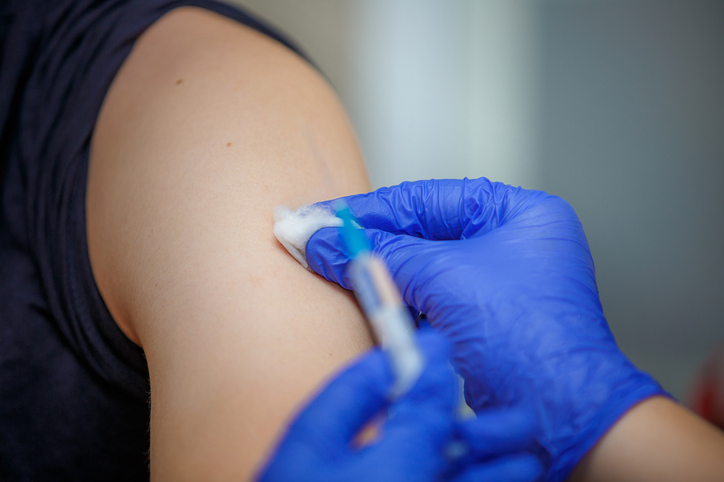
Photo: LarisaBozhikova, Getty Images



Source link

Tags: abbott labsacceleratoradvanced cellular technologyamyotrophic lateral sclerosisCambridgeCancerCDMOscertified emrchinadcdealflowdiabetesdiagnostic platformsdiagnostics companydoctorsehrelectronic health recordselectronic medical recordsembryonic stem cellsemployee wellness programsemrfoodborne pathogensgeron corporationhealth and wellnesshealthcare innovationhealthcare ithealthwayshospitalshumirainvestinglaser surgerylife scienceslou gehrigmassachusettsmd anderson cancer centermdtmedcity newsmedical devicesmedtronicminimally invasive surgeryminneapolisminnesotamotion sensorsobesityoverweightPandemicpatient monitoring systempharmaceuticalsPreparednesspublicsr&drenal denervationrock healthsan franciscoshanghai innovation centerskin disordersst. jude medicalstartup advicestartup fundingstartupsstjtexastimetwin citiesulcerative colitiswashingtonweight losswellnesswellpoint
ShareTweetSendShare
Previous Post

Camels, Crowns, and a Cosmic GPS… 3 wise kings

Next Post

Treibhausgase in Europa verstehen

Related Posts

Warum es an der Zeit ist, die HCC-Codierung intern einzuführen
Gesundheit

Warum es an der Zeit ist, die HCC-Codierung intern einzuführen

November 21, 2025
Die neue Sprache der Qualität: Was uns KI über Dokumentation beibringt
Gesundheit

Die neue Sprache der Qualität: Was uns KI über Dokumentation beibringt

November 21, 2025
Vereinfachung des Patientenzugangs und Aufbau von Vertrauen mithilfe von KI
Gesundheit

Vereinfachung des Patientenzugangs und Aufbau von Vertrauen mithilfe von KI

November 21, 2025
Gesundheitsorganisationen kritisieren CDC wegen Änderung der Website mit irreführenden Impfstoffaussagen
Gesundheit

Gesundheitsorganisationen kritisieren CDC wegen Änderung der Website mit irreführenden Impfstoffaussagen

November 21, 2025
Wer zahlt, wenn die ACA-Steuergutschriften verfallen?
Gesundheit

Wer zahlt, wenn die ACA-Steuergutschriften verfallen?

November 20, 2025
Wenn die Transparenz der Arzneimittelpreise nicht ausreicht
Gesundheit

Wenn die Transparenz der Arzneimittelpreise nicht ausreicht

November 20, 2025
Next Post
Treibhausgase in Europa verstehen

Treibhausgase in Europa verstehen

Get a Microsoft Office license for Mac or PC for just  right now

Get a Microsoft Office license for Mac or PC for just $40 right now

Reports suggest Napoli have reached a preliminary agreement for top Tottenham target

Reports suggest Napoli have reached a preliminary agreement for top Tottenham target

CATEGORIES

  • business
  • Gesundheit
  • health
  • Lebensstil
  • lifestyle
  • Meinung
  • Politik
  • Sport
  • Technologie
  • Uncategorized
  • Unterhaltung
  • Unternehmen
  • Verteidigung
  • Weltweit
No Result
View All Result

LATEST UPDATES

  • Die Zahl der zivilen Todesfälle in der Ukraine übersteigt die Zahl des letzten Jahres, da der Winter die Krise verschärft, warnt der Sicherheitsrat
  • Bitcoin fällt unter 81.000 US-Dollar und erreicht den niedrigsten Stand seit 2022
  • „Warum nicht mit dem Zug fahren? Ist das erste Klasse?‘: Laura Loomer verspottet den Sozialisten Mamdani, weil er ein Flugzeug genommen hat
  • Warum es an der Zeit ist, die HCC-Codierung intern einzuführen
  • Haftungsausschluss
  • Kontakt
  • Cookie-Richtlinie
  • Datenschutzerklärung
  • Geschäftsbedingungen

Copyright © 2024 DerInformant.
DerInformant.com is not responsible for the content of external sites. DerInformant.com is a proud member of BXL MEDIA

No Result
View All Result
  • Global
  • Politik
  • Verteidigung
  • Unternehmen
  • Gesundheit
  • Sport
  • Tech
  • Unterhaltung
  • Lebensstil

Copyright © 2024 DerInformant.
DerInformant.com is not responsible for the content of external sites. DerInformant.com is a proud member of BXL MEDIA

Welcome Back!

Login to your account below

Forgotten Password?

Retrieve your password

Please enter your username or email address to reset your password.

Log In
Verwalte deine Privatsphäre

To provide the best experiences, we and our partners use technologies like cookies to store and/or access device information. Consenting to these technologies will allow us and our partners to process personal data such as browsing behavior or unique IDs on this site and show (non-) personalized ads. Not consenting or withdrawing consent, may adversely affect certain features and functions.

Click below to consent to the above or make granular choices. Your choices will be applied to this site only. You can change your settings at any time, including withdrawing your consent, by using the toggles on the Cookie Policy, or by clicking on the manage consent button at the bottom of the screen.

Functional Always active
The technical storage or access is strictly necessary for the legitimate purpose of enabling the use of a specific service explicitly requested by the subscriber or user, or for the sole purpose of carrying out the transmission of a communication over an electronic communications network.
Preferences
The technical storage or access is necessary for the legitimate purpose of storing preferences that are not requested by the subscriber or user.
Statistics
The technical storage or access that is used exclusively for statistical purposes. The technical storage or access that is used exclusively for anonymous statistical purposes. Without a subpoena, voluntary compliance on the part of your Internet Service Provider, or additional records from a third party, information stored or retrieved for this purpose alone cannot usually be used to identify you.
Marketing
The technical storage or access is required to create user profiles to send advertising, or to track the user on a website or across several websites for similar marketing purposes.
Statistics

Marketing

Features
Always active

Always active
Manage options Manage services Manage {vendor_count} vendors Read more about these purposes
Optionen verwalten
{title} {title} {title}